


Start here
- Lec 1a: Basic Properties
- Lec 2: SI units
- Lec 3: Electrical Symbols
- Lec 4: Ohm's Law
- Lec 5: Series vs Parallel Circuits
- Lec 6: Series-Parallel Circuits
- Lec 7: Current Divider Rule
- Lec 8: Voltage Divider Rule
- Lec 9: Kirchhoff's Voltage Law
- Lec 10: Kirchhoff's Current Law
- Lec 11: Norton theorem
- Lec 12: Thevenin theorem
- Lec 13: Superposition theorem
- Lec 14: Delta to Wye
- Lec 15: Wye to Delta
Popular
-
 Electrical power exists in two forms, the AC, and the DC in this section, you'll learn the basics of both. Electrical cells, batterie...
 -
 A potentiometer is three terminal resistor which provides variable resistance at its output. A potentiometer contains three parts. Base...
 -
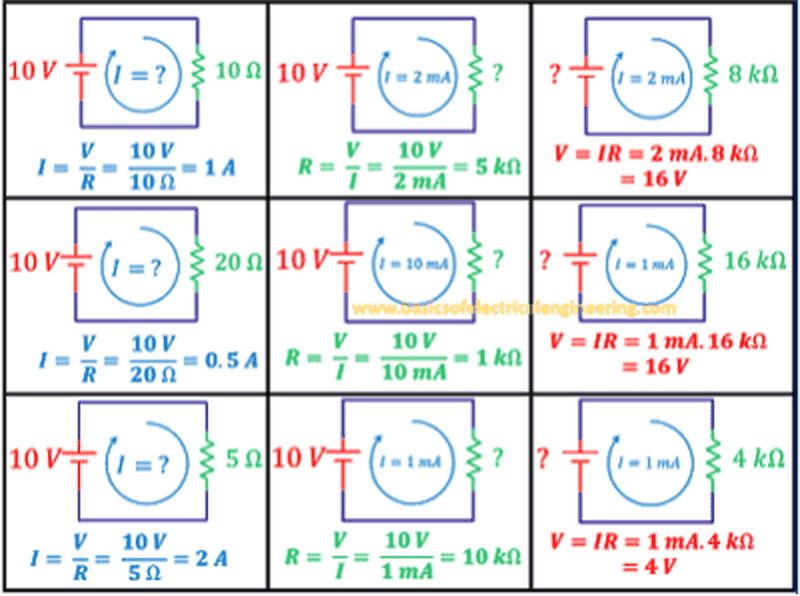 The amount of current flowing through any resistor is directly proportional to the amount of voltage applied across its ends. Mathemati...
 -
![Basic Properties of Electrical Circuits: Voltage, Current, Resistance, Power [The Mountain Analogy]](/-bBCMdrhXXj4/WWzcjdFJOLI/AAAAAAAAC2Y/SI648RXRAyg4qk2RnxaQrsKv5zZ406lHQCK4BGAYYCw/w72-h72-p-k-no-nu/basic-quantities-of-electrical-engineering.png) Current, Voltage, Resistance, and Power are the four basic properties of electrical circuits. The mountain analogy in this article will hel...
Current, Voltage, Resistance, and Power are the four basic properties of electrical circuits. The mountain analogy in this article will hel... -
 The diode is a two terminal component which allows the flow of AC in one direction and stops it in another direction. Download our Andr...
No comments:
Post a Comment